
Ask what a day on a trek is like and most answers are scenery. The better answer is a timetable — because the timetables on our routes are all tuned to the same few truths: the light does its work early, the body needs its middle of the day, and the evening is when the next day gets built. Here is the pattern, hour by hour, assembled from the day cards of the group trek and the snow leopard week.
06:00–07:00: before and at first light.
The day cards put it in numbers: field days start at six or seven in the morning. On the snow leopard week that is why the hour exists — the cats hunt in the first light, and the vehicles roll before breakfast sits well. On the trekking routes the same clock runs for a calmer reason: passes want cool bodies and stable morning snow, and the in-depth trek’s Yulongxi day is called a seven o’clock start in its own card. Breakfast is early and functional; the memorable light outside belongs to whoever is already walking.
The working morning: four hours before lunch.
The morning is the day’s engine. The pass days name their arithmetic plainly — “five or six hours” of climbing on the Yala trek’s big day, twelve to fourteen kilometres at eight hours on the Riuqi day — and all of that arithmetic lands before mid-afternoon. Morning is also when the group spreads into its natural order and the guide’s job becomes pacing: nobody summits a 4,850-metre pass on breakfast. On the wildlife weeks the morning is scanning hours, and the day card’s “more than one vehicle” means the valley gets worked from both ends while the light is still honest.
The protected middle.
The snow leopard week’s card says it outright: midday — rest on some days. Noon on the plateau is for shade, food and not moving, on the treks exactly as on the wildlife weeks. The long walking days break for a proper hour where the water is; the hard mornings after a cold camp protect a doze. This is the part of the timetable that people skip at sea level and cannot skip at 4,000 metres — the altitude guide is blunt about the physiology.
Afternoon: into camp.
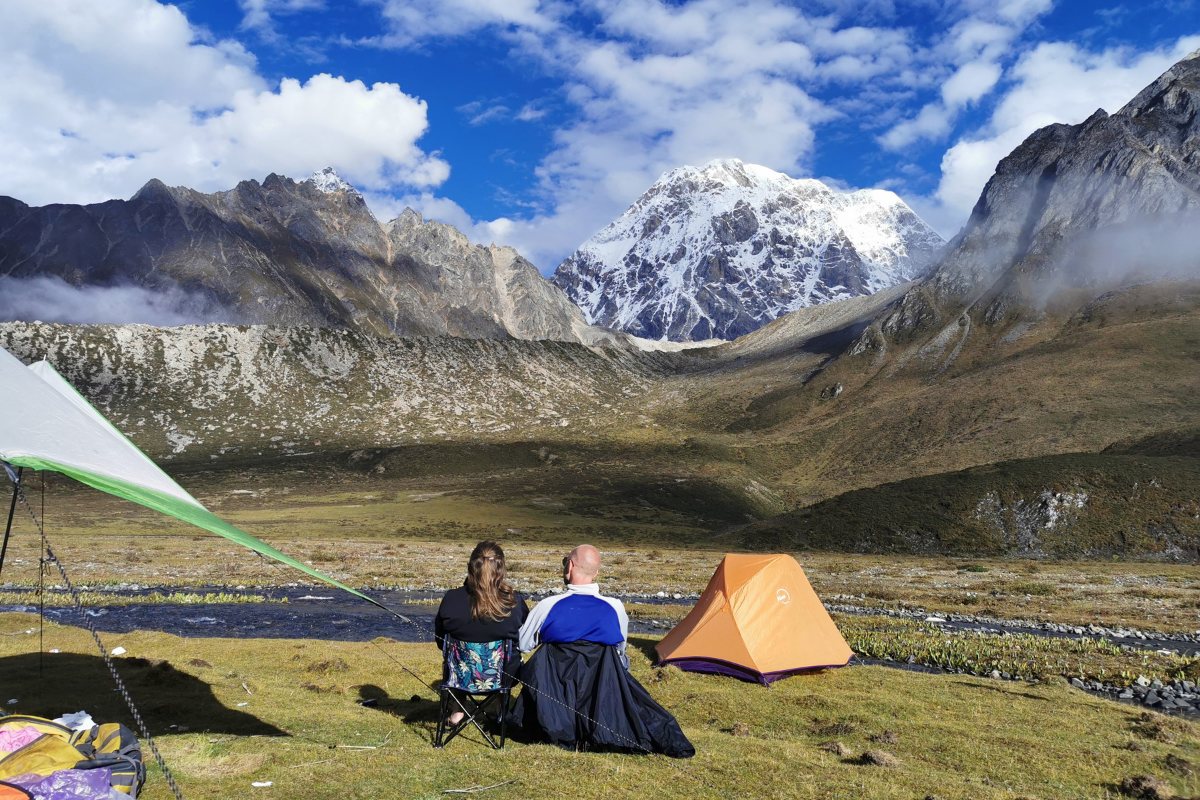
Supported treks aim the day at a camp that moves with you: the horses and the crew have gone ahead, and the tents are up — on the group trek, five nights of eight under canvas — before the walkers straggle in. Arrival is unhurried on purpose. The Riwuqi version is the extreme: two nights at the same grass camp, so the afternoon is pitching once and then doing nothing at all, at 3,850 metres, with the peaks doing the entertaining. Hotel nights run the same shape with a shower at the end.
The evening: tomorrow’s plan.
Dinner is early and communal, and the real business comes after it: the guide walks the group through tomorrow — the pass, the weather, the turnaround time, and on the seasonal routes the possibility that “the night may move to the village”, which the Yala card says will be called the day before. On the snow leopard week the equivalent session reads the day’s sign and picks tomorrow’s valley; at some locations it continues as a night drive. Lights out early. The timetable’s last entry is always the same: the night is the next day’s first decision.
Hours, distances and camp details checked 7 November 2026 against the route pages. The pattern is assembled; your day will vary with the weather.
Join one?
The Gongga group trek, fixed 2027 dates
How the fixed departures work