A route card from our western pages reads like a vocabulary test: Zheduo, Yajiageng, Langgatso, Yumtso, Riuqi, Gongga Gompa. It is not as foreign as it looks. Most of these names are plain Tibetan geography — the same handful of words recombined for a thousand years — and once you have the vocabulary, every signpost on the plateau starts translating itself.
The glossary.
| Word | It means | You will meet it on |
|---|---|---|
| la | Pass | Zheduo, Balang, Yajiageng, Zimei, Yulongxi |
| tso | Lake | Langgatso, Yala Yumtso, Tsopu |
| gompa | Monastery | Gongga Gompa, Katok |
| konka / gongga | The mountain’s own name — Minya Konka, Tibetan for Gongga Shan | The five Konka routes |
| ri | Mountain | in compound names across the valley cards |
La: the passes.
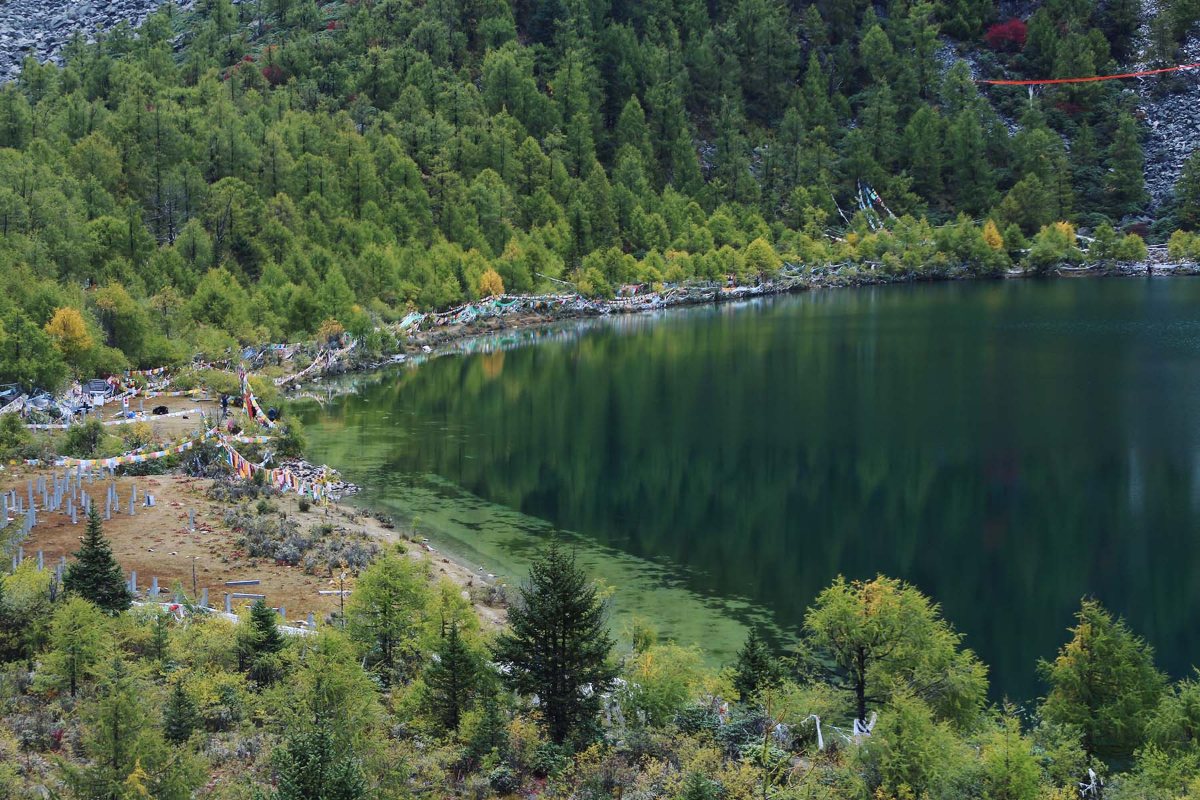
Every big climbing day on our routes ends at a la, and the route cards name them like old friends. Zheduo sits above Kangding, the pass the tea caravans crossed out of the tea country. Balang guards the road to Rilong and the Siguniang valleys — the northern routes go under it in a tunnel near 3,800 metres. Yajiageng is the green pass between Kangding and Moxi with the dark little lake at its shoulder, the one the acclimatisation walks circle. Zimei is the gompa-side gate of the Konka circuit, and Yulongxi, at 4,500 metres, is the panorama trek’s high point and the descent into the Moxi valley. Say “la” to yourself at each one and you are speaking the trail’s own shorthand.
Tso: the lakes.
The lakes carry the same logic. Langgatso — the mirror lake under Minya Konka, 4,500 metres, the one the in-depth trek sleeps beside — and Yala Yumtso, the holy lake prayer-fringed under Yala’s glaciers, are the two you will dream about. Tsopu is the pilgrimage lake valley above Batang on the long journey. West of the forests, a name ending in tso is a promise: walk to it early, before the wind and the tour buses put ripple on the water.
The three of Yading.
Yading’s three holy peaks carry the Tibetan names of three bodhisattvas: Chenrezig, Jampelyang and Chanadorje — the same figures the monasteries paint, which is why the sanctuary is a sanctuary at all. The snow pyramid over Pearl Lake is Chenrezig; the big walking day climbs to Milk Lake and Five-Colour Lake under Jampelyang. The names are not decoration: they are the reason the valleys below them were left ungrazed and unlogged long enough to become a national park.
The numbers under the names.
One habit from the route cards completes the kit: the altitudes. Every pass, lake and sleeping place on our pages carries its metres — Yulongxi at 4,500, Langgatso at 4,500, the Riuqi Pass at 4,850 on the group trek and 4,950 beyond it, Yading’s park pass at 4,900. Name plus number is the whole navigation system: the la tells you what kind of day it is, the number tells you how much sky you will be under. The grading page ranks them all in one table, and the monastery primer covers the buildings the names point at.
Names, meanings and altitudes checked 7 November 2026 against the route pages. The glossary words are standard Tibetan; the specific peaks and passes are as named on our routes.
Use it out there?
The Gongga group trek, over the Riuqi Pass
The Yading hiking & photo tour, 8 days