
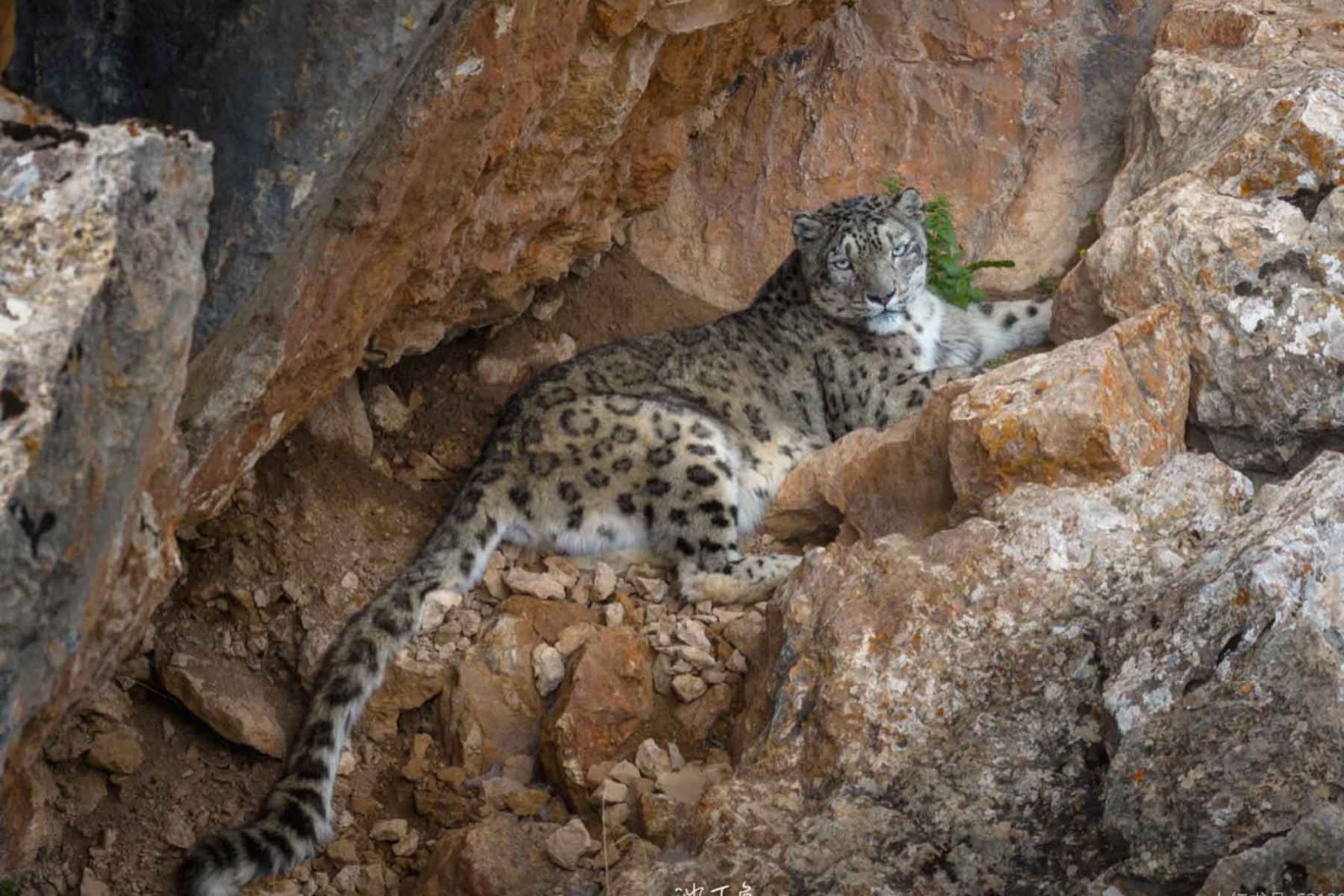
The most common wrong idea about looking for snow leopards is that it is a matter of luck, unstructured, a lottery ticket with scenery. It is not. On the Sanjiangyuan plateau, where long-term survey work has identified 85 individual snow leopards and 12 common leopards, the search is a craft with three moving parts: the prey, the clock and the sign. A week in the field is mostly spent working those three.
Start with the blue sheep.
Everything begins with Himalayan blue sheep. Snow leopards eat them, so where the herds feed, the cats can be; where the herds are absent, the cats are somewhere else. This is why the sighting bands on our routes put blue sheep in the near-certain line and why the guides count the herds every day as carefully as they look for the cats. In winter, snow sits on the ridges and pushes the blue sheep down the slopes; the cats follow them down. The valley you scan is chosen by the sheep long before the cat arrives in it.
The window: first and last light.
Snow leopard hunting peaks in the first and last light. That single fact organises the whole week: the field days on the snow leopard tour start at six or seven in the morning, not for the driving but because the hours on either side of the day are when a cat moves. The middle of the day belongs to the sheep dozing and the cat resting — and, sensibly, to the travellers resting too. Several field locations run night drives for the honest nocturnal trades: fox, Pallas’s cat, and occasionally the cats themselves on the move.
Reading the middle of the day.
The hours when nobody is scanning for a silhouette are when the valley’s text gets read. Tracks in a gully, scrapes on a saddle, scent marks under an overhang, the remains of a kill: all of it says which ridge was used last night and which approaches are worth an evening vigil. More than one vehicle is used on the field days precisely so the sign and the sheep can be worked in parallel — one team holding a viewpoint, another repositioning to the far end of the valley. This is the part of the week that looks uneventful and is actually the whole point.
The honest odds.
We would rather say this now than explain it at the airport: a good week is not a guaranteed cat. Plenty of well-run trips end with blue sheep, blood pheasant, white-lipped deer, fresh pugmarks in a gully and no sighting at all. The 85 identified individuals mean a world-class density — the best starting point in Asia — not a promise. What the structure of the week does is put the odds as far on your side as fieldcraft allows: the right valleys, the right hours, and local knowledge refreshed daily.
How the week is run.
The seven-day tour lands at Yushu at 3,680 metres and treats the arrival day as the acclimatisation rung it is: gentle, optional walking, an early night. Five field days follow on the plateau, each one planned the evening before around where the sheep and the sign were that day. Access runs through licensed local arrangements, with group numbers capped — the same access discipline we describe in the Sanjiangyuan field report. And the ethics travel with you: the watching-without-disturbing rules apply double when the animal you may find is one the whole valley depends on. The herds themselves are worth the trip even on the weeks the cat stays invisible.
Survey figures, light windows and access rules checked 7 November 2026 against the Sanjiangyuan field report and the route page.
Go and read one?
The snow leopard tour, 7 days
Our Sanjiangyuan snow leopard field report